
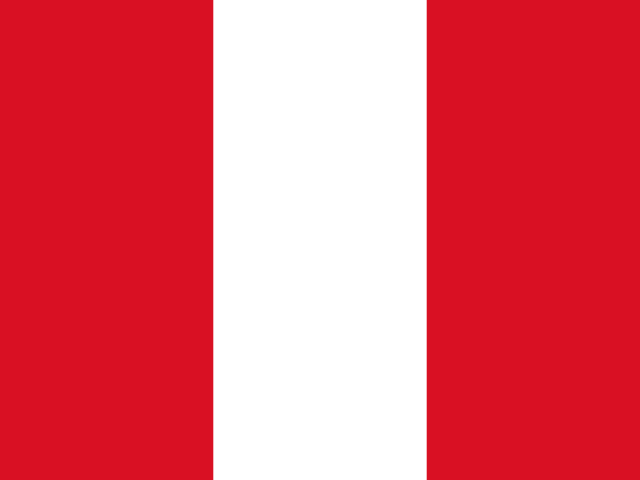
Are you compatible with Peru?
A traditional, Catholic-influenced country where Andean heritage and family life remain strong. Daily life spans a busy capital, mountain towns and rainforest, at a low cost.

What makes Peru stand out
49 of 59
Economy: Peru is more market-led than most countries in the quiz.
Public health and education exist, but many families rely on private clinics and schools.
40 of 59
Budget: Peru is cheaper to live in than more than half the countries in the quiz.
Everyday costs are low, particularly for food, transport and local services.
39 of 59
Social style: Peru is more expressive than more than half the countries in the quiz.
People are friendly and warm, often a bit reserved at first in the highlands.
Peru on all 12 axes
0 is the left pole and 100 the right. Each position is an editorial estimate of typical policy and everyday norms, with the reason underneath.
Values
Public health and education exist, but many families rely on private clinics and schools.
Personal freedoms are broad, with a moderate emphasis on order and respect for authority.
Traditional values remain strong, especially outside the capital, with gradual social change.
Catholic faith is part of national life, often blended with Andean customs and festivals.
The country is open to trade and tourism, with strong pride in its indigenous heritage.
Mining and growth are priorities, with conservation focused on the Amazon and the Andes.
Lifestyle
The climate varies from dry coast to cold highlands and humid rainforest.
The capital is large and busy, while mountain and jungle towns have a slower rhythm.
Everyday costs are low, particularly for food, transport and local services.
Working hours are fairly long, and many people combine several jobs.
People are friendly and warm, often a bit reserved at first in the highlands.
Family and community are central, with strong ties across generations.
Who tends to match Peru
You are likely to score high with Peru if you lean toward:
- close family and communityFamily ties
- religion in public lifeReligion in public life
- a low cost of livingBudget
- an expressive social styleSocial style
You might enjoy
- ceviche lunches
- andean treks
- bustling food markets
Countries most like Peru
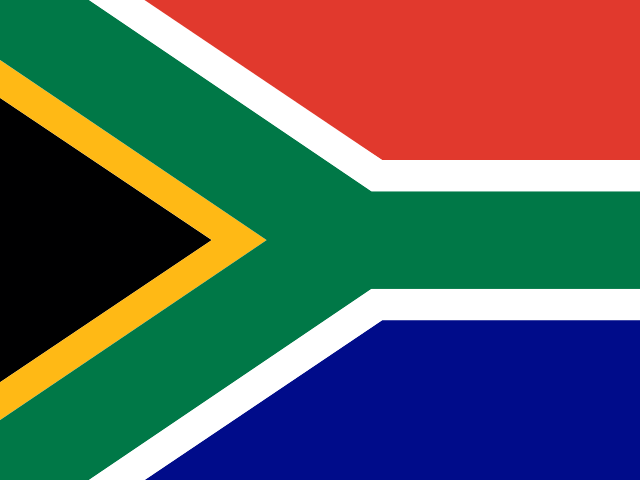
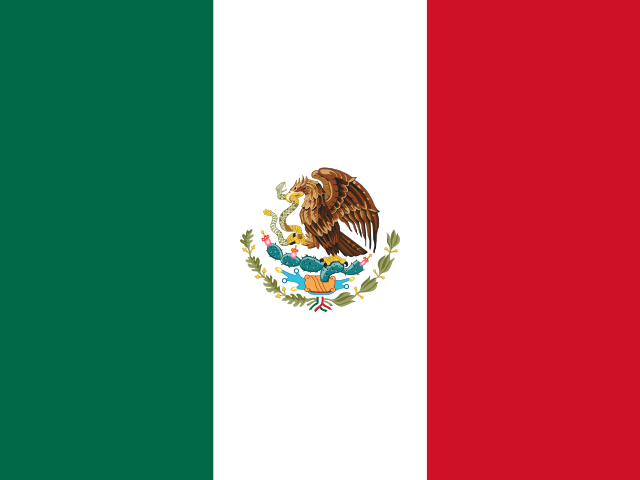
Least like Peru
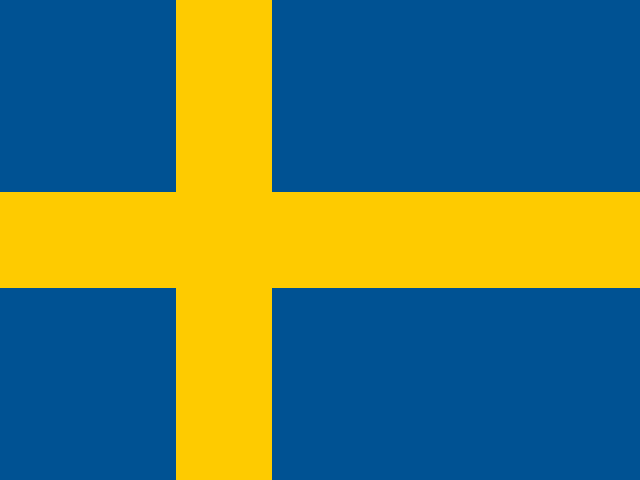
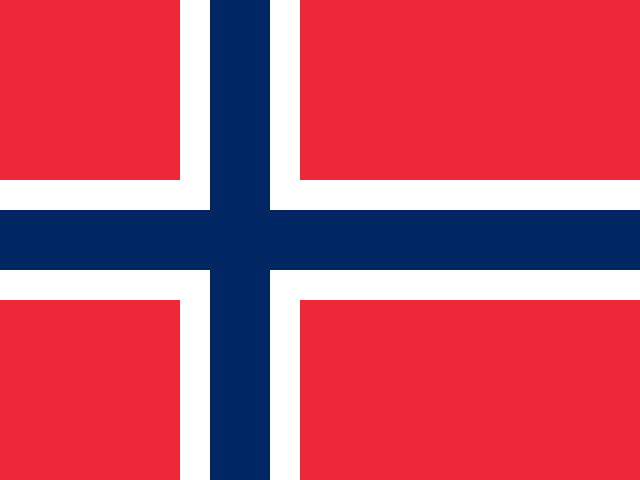

Similarity uses the quiz’s match formula with all 12 axes counted equally.
Take the quiz: how close are you to Peru?
Find your most compatible country
Statements on your values and how you like to live. Rate each from strongly disagree to strongly agree.
24 statements, about 3 minutes, no sign-up
Browse all 60 country profiles
Canada
83% match
- 2
 Ireland81%
 - 3
 United Kingdom79%
 - 4
 Belgium78%
For fun and reflection; not immigration, legal or financial advice.
Peru: questions
Am I compatible with Peru?
Take the 24-statement quiz to get your match % with Peru and 59 other countries. People who match Peru closely tend to lean toward close family and community, religion in public life and a low cost of living.
Which countries are most like Peru?
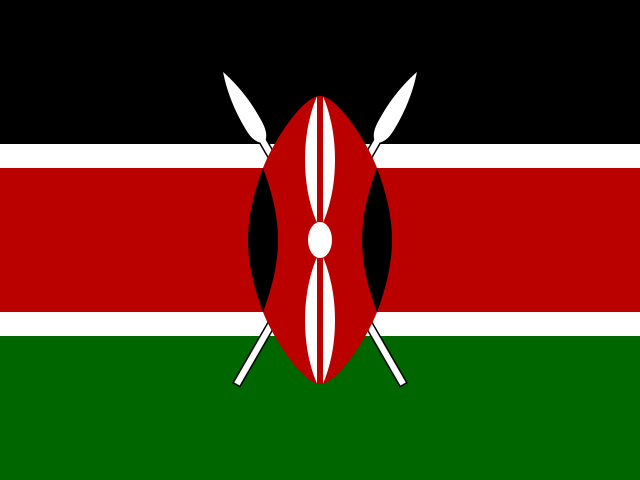
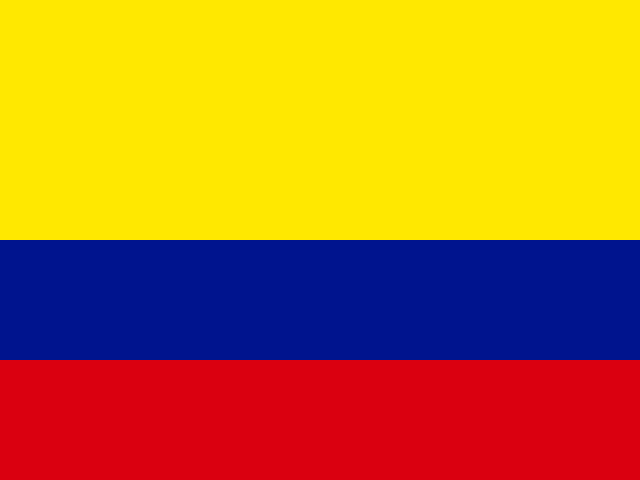
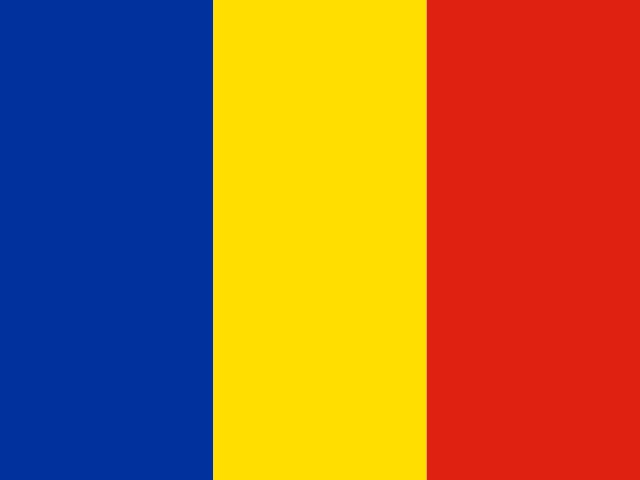
On the quiz's 12 axes, the closest profiles are Kenya (91%), Colombia (90%) and Romania (90%). The least similar is Sweden (55%).
What makes Peru stand out?
Its most distinctive axis is economy: Peru is more market-led than 49 of the other 59 countries in the quiz. Public health and education exist, but many families rely on private clinics and schools.
How was the Peru profile made?
It is an editorial estimate of typical public policy and everyday social norms on 12 axes, six on values and six on lifestyle, each scored 0 to 100. It describes the country as a whole, not its government, any party or any person who lives there.