
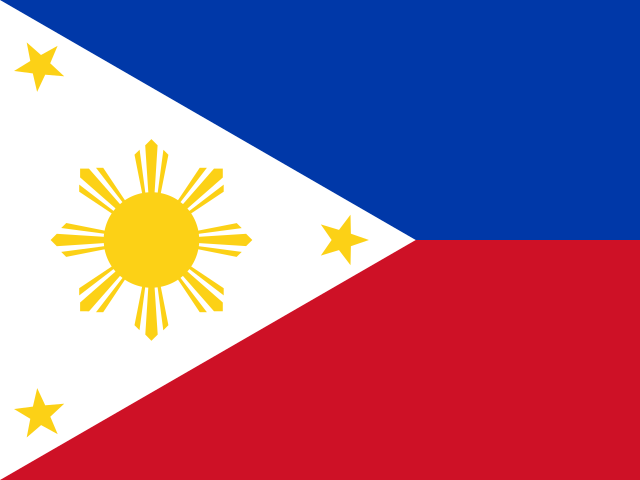
Are you compatible with Philippines?
A Catholic-majority island nation where family and faith are at the heart of daily life. Life is warm, sociable and affordable, with busy cities and thousands of islands.

What makes Philippines stand out
55 of 59
Economy: Philippines is more market-led than almost every other country in the quiz.
Public health insurance exists, but many families pay privately for hospitals and schools.
52 of 59
Family ties: Philippines is more family-centred than most countries in the quiz.
Extended family is at the heart of life, and relatives support each other closely.
52 of 59
Social style: Philippines is more expressive than most countries in the quiz.
People are warm, cheerful and expressive, and karaoke is a popular pastime.
Philippines on all 12 axes
0 is the left pole and 100 the right. Each position is an editorial estimate of typical policy and everyday norms, with the reason underneath.
Values
Public health insurance exists, but many families pay privately for hospitals and schools.
Personal freedoms are broad, with a strong emphasis on public safety.
Family values and religious customs remain strong and change slowly.
Catholic faith is very visible, with churches, fiestas and religious holidays central to life.
Many people work abroad, and the country is outward-looking in culture and language.
Growth is a priority, with concern for coastlines and resilience to typhoons.
Lifestyle
It is hot and humid year-round, with a rainy season and frequent storms.
The capital region is dense and busy, while provinces and islands are relaxed.
Living costs are low, especially outside the capital region.
Working hours can be long, but family and celebrations come first.
People are warm, cheerful and expressive, and karaoke is a popular pastime.
Extended family is at the heart of life, and relatives support each other closely.
Who tends to match Philippines
You are likely to score high with Philippines if you lean toward:
- warm weatherClimate
- close family and communityFamily ties
- religion in public lifeReligion in public life
- an expressive social styleSocial style
You might enjoy
- family karaoke nights
- island beach trips
- town fiestas
Countries most like Philippines
Least like Philippines
Similarity uses the quiz’s match formula with all 12 axes counted equally.
Take the quiz: how close are you to Philippines?
Find your most compatible country
Statements on your values and how you like to live. Rate each from strongly disagree to strongly agree.
24 statements, about 3 minutes, no sign-up
Browse all 60 country profiles
Canada
83% match
- 2
 Ireland81%
 - 3
 United Kingdom79%
 - 4
 Belgium78%
For fun and reflection; not immigration, legal or financial advice.
Philippines: questions
Am I compatible with Philippines?
Take the 24-statement quiz to get your match % with Philippines and 59 other countries. People who match Philippines closely tend to lean toward warm weather, close family and community and religion in public life.
Which countries are most like Philippines?
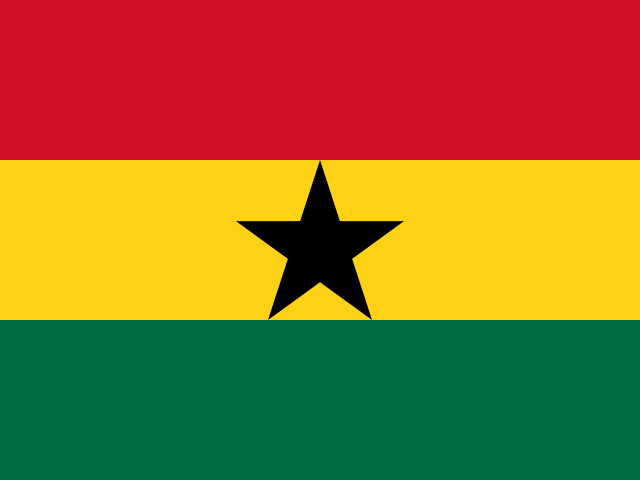
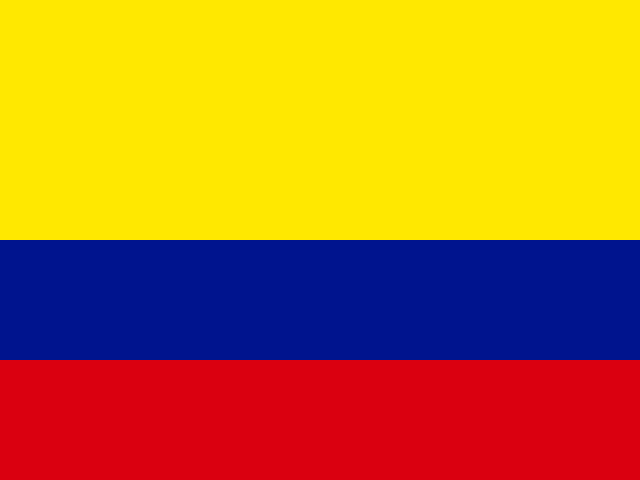
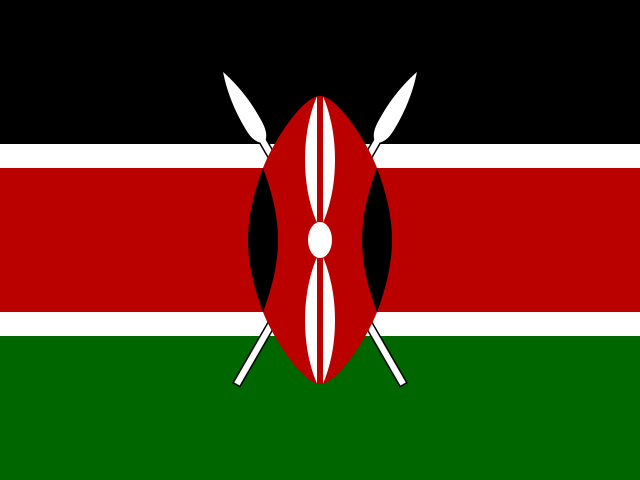
On the quiz's 12 axes, the closest profiles are Ghana (95%), Colombia (89%) and Kenya (89%). The least similar is Sweden (45%).
What makes Philippines stand out?
Its most distinctive axis is economy: Philippines is more market-led than 55 of the other 59 countries in the quiz. Public health insurance exists, but many families pay privately for hospitals and schools.
How was the Philippines profile made?
It is an editorial estimate of typical public policy and everyday social norms on 12 axes, six on values and six on lifestyle, each scored 0 to 100. It describes the country as a whole, not its government, any party or any person who lives there.