
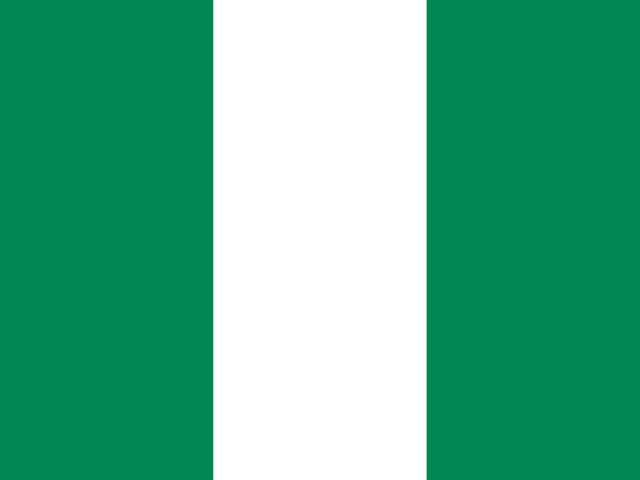
Are you compatible with Nigeria?
A deeply religious, entrepreneurial country where family and community come first. Life is fast, loud and vibrant, with huge cities, music and big celebrations.

What makes Nigeria stand out
59 of 59
Economy: Nigeria is more market-led than every other country in the quiz.
Most services are paid privately, and people rely on family and business rather than the state.
58 of 59
Religion in public life: Nigeria is more religious in public life than almost every other country in the quiz.
Christian and Muslim faith are both central to public and private life.
58 of 59
Social style: Nigeria is more expressive than almost every other country in the quiz.
People are very expressive, confident and outgoing, with lively social events.
Nigeria on all 12 axes
0 is the left pole and 100 the right. Each position is an editorial estimate of typical policy and everyday norms, with the reason underneath.
Values
Most services are paid privately, and people rely on family and business rather than the state.
Personal freedoms are broad, with a strong emphasis on safety and social respect.
Traditional values and respect for elders are strong across communities.
Christian and Muslim faith are both central to public and private life.
National pride is strong, and the diaspora keeps the country globally connected.
Oil and growth are priorities, with environmental policy a secondary focus.
Lifestyle
It is hot year-round, with a rainy season and a dry, dusty harmattan season.
The largest cities are huge, crowded and full of energy day and night.
Everyday costs are low, though imported goods and city housing can be expensive.
Hustle and entrepreneurship are celebrated, and people work long hours.
People are very expressive, confident and outgoing, with lively social events.
Extended family and community are central, and celebrations are large.
Who tends to match Nigeria
You are likely to score high with Nigeria if you lean toward:
- religion in public lifeReligion in public life
- warm weatherClimate
- an expressive social styleSocial style
- close family and communityFamily ties
You might enjoy
- afrobeats nights
- big wedding parties
- jollof rice gatherings
Countries most like Nigeria
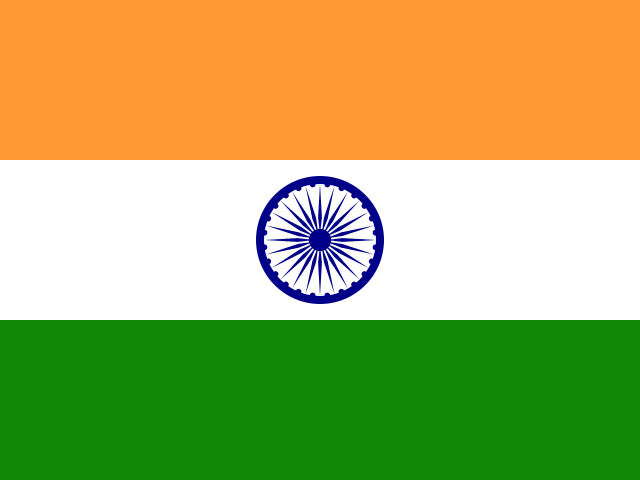
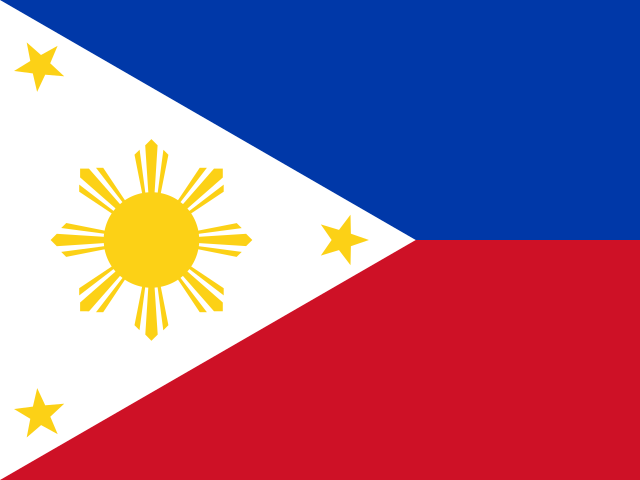
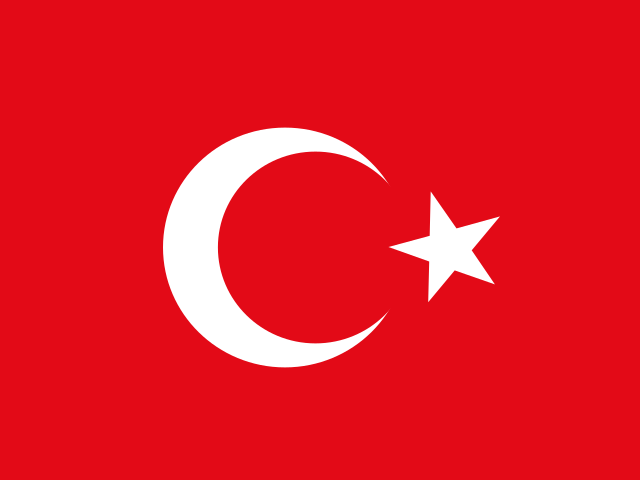
Least like Nigeria
Similarity uses the quiz’s match formula with all 12 axes counted equally.
Take the quiz: how close are you to Nigeria?
Find your most compatible country
Statements on your values and how you like to live. Rate each from strongly disagree to strongly agree.
24 statements, about 3 minutes, no sign-up
Browse all 60 country profiles
Canada
83% match
- 2
 Ireland81%
 - 3
 United Kingdom79%
 - 4
 Belgium78%
For fun and reflection; not immigration, legal or financial advice.
Nigeria: questions
Am I compatible with Nigeria?
Take the 24-statement quiz to get your match % with Nigeria and 59 other countries. People who match Nigeria closely tend to lean toward religion in public life, warm weather and an expressive social style.
Which countries are most like Nigeria?
On the quiz's 12 axes, the closest profiles are India (88%), Philippines (86%) and Turkey (84%). The least similar is Sweden (36%).
What makes Nigeria stand out?
Its most distinctive axis is economy: Nigeria is more market-led than 59 of the other 59 countries in the quiz. Most services are paid privately, and people rely on family and business rather than the state.
How was the Nigeria profile made?
It is an editorial estimate of typical public policy and everyday social norms on 12 axes, six on values and six on lifestyle, each scored 0 to 100. It describes the country as a whole, not its government, any party or any person who lives there.