
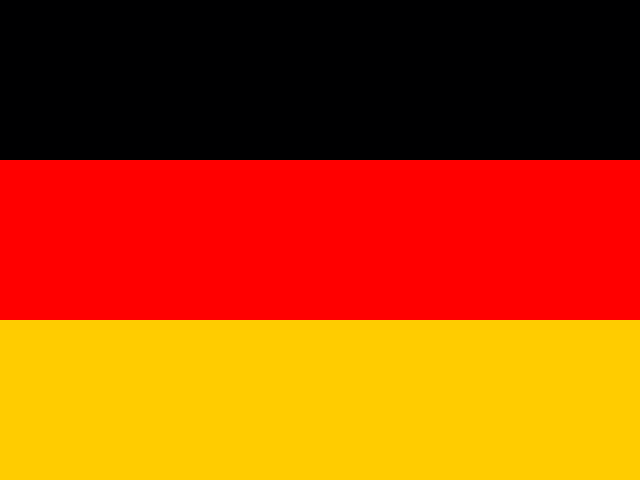
Are you compatible with Germany?
A social market economy known for orderly daily life, strong worker protections and green habits. Life is spread across many regional cities, with a clear divide between work and leisure.

What makes Germany stand out
49 of 59
Growth vs environment: Germany is more environment-focused than most countries in the quiz.
Recycling, renewable energy and green urban planning are strong features of everyday life.
49 of 59
Family ties: Germany is more individualistic than most countries in the quiz.
Independence is encouraged early, and many people move away from their home towns for work.
47 of 59
Economy: Germany is more state-led than most countries in the quiz.
A social market economy pairs competitive industry with statutory health insurance and strong worker protections.
Germany on all 12 axes
0 is the left pole and 100 the right. Each position is an editorial estimate of typical policy and everyday norms, with the reason underneath.
Values
A social market economy pairs competitive industry with statutory health insurance and strong worker protections.
Rules and order are respected in daily life, from quiet hours on Sundays to careful recycling.
Social attitudes are broadly liberal, with change usually arriving through consensus and gradual reform.
Churches collect a state-administered tax from members, while public life is largely secular.
Deeply tied to the European project and global trade, with ongoing debate about migration.
Recycling, renewable energy and green urban planning are strong features of everyday life.
Lifestyle
Temperate weather brings cold winters, mild springs and warm but changeable summers.
Several mid-sized cities share importance, so no single metropolis dominates daily life.
Costs are high in major cities such as Munich, but moderate in many other regions.
Working hours are regulated and holidays generous, with a clear line between work and leisure.
Directness and punctuality are valued, with warmth often reserved for close friends.
Independence is encouraged early, and many people move away from their home towns for work.
Who tends to match Germany
You are likely to score high with Germany if you lean toward:
- a secular public lifeReligion in public life
- the environment firstGrowth vs environment
- cooler weatherClimate
- high incomes and high pricesBudget
You might enjoy
- cycling to work
- beer gardens in summer
- quiet sunday walks in the forest
Countries most like Germany
Least like Germany
Similarity uses the quiz’s match formula with all 12 axes counted equally.
Take the quiz: how close are you to Germany?
Find your most compatible country
Statements on your values and how you like to live. Rate each from strongly disagree to strongly agree.
24 statements, about 3 minutes, no sign-up
Browse all 60 country profiles
Canada
83% match
- 2
 Ireland81%
 - 3
 United Kingdom79%
 - 4
 Belgium78%
For fun and reflection; not immigration, legal or financial advice.
Germany: questions
Am I compatible with Germany?
Take the 24-statement quiz to get your match % with Germany and 59 other countries. People who match Germany closely tend to lean toward a secular public life, the environment first and cooler weather.
Which countries are most like Germany?
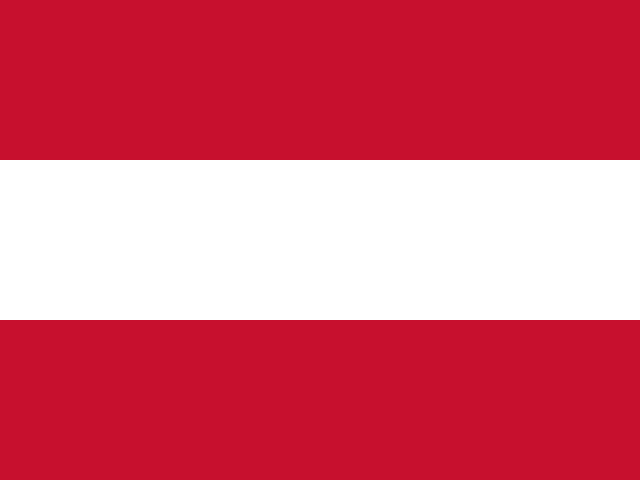
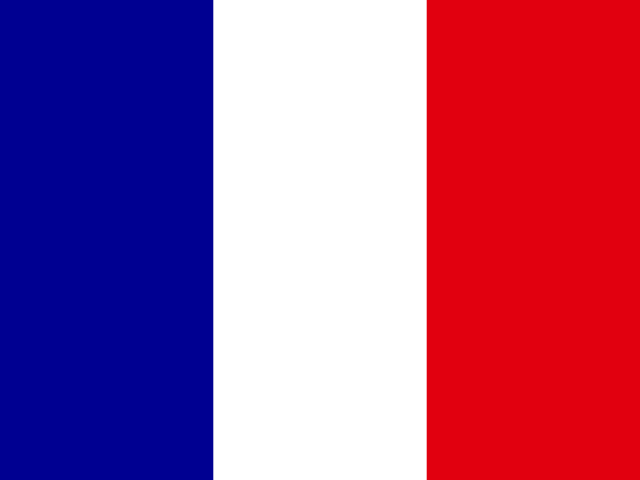
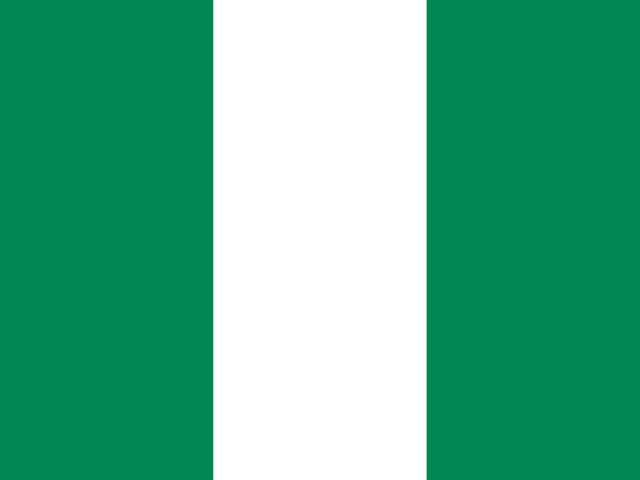
On the quiz's 12 axes, the closest profiles are Austria (91%), Belgium (91%) and United Kingdom (87%). The least similar is Nigeria (53%).
What makes Germany stand out?
Its most distinctive axis is growth vs environment: Germany is more environment-focused than 49 of the other 59 countries in the quiz. Recycling, renewable energy and green urban planning are strong features of everyday life.
How was the Germany profile made?
It is an editorial estimate of typical public policy and everyday social norms on 12 axes, six on values and six on lifestyle, each scored 0 to 100. It describes the country as a whole, not its government, any party or any person who lives there.